

Primary Healthcare by, for and with Informal Women Workers
At Lok Swasthya, we focus on improving the health of informal women workers and their families by providing primary health care services. Our approach relies on training women from local communities to lead and provide health education and support.
Our Arogya Sevikas (Community Health Workers) and Arogya Sakhis are grassroot level women who are trained and work directly with the communities, helping people understand about how to remain healthy, develop some understanding of common diseases and other health issues. They also guide them to seek quality healthcare from local providers especially those in the public health system. These community health workers play a key role in filling the gaps in the current healthcare system by making health information accessible and linking people to government schemes and services and also to private ones.
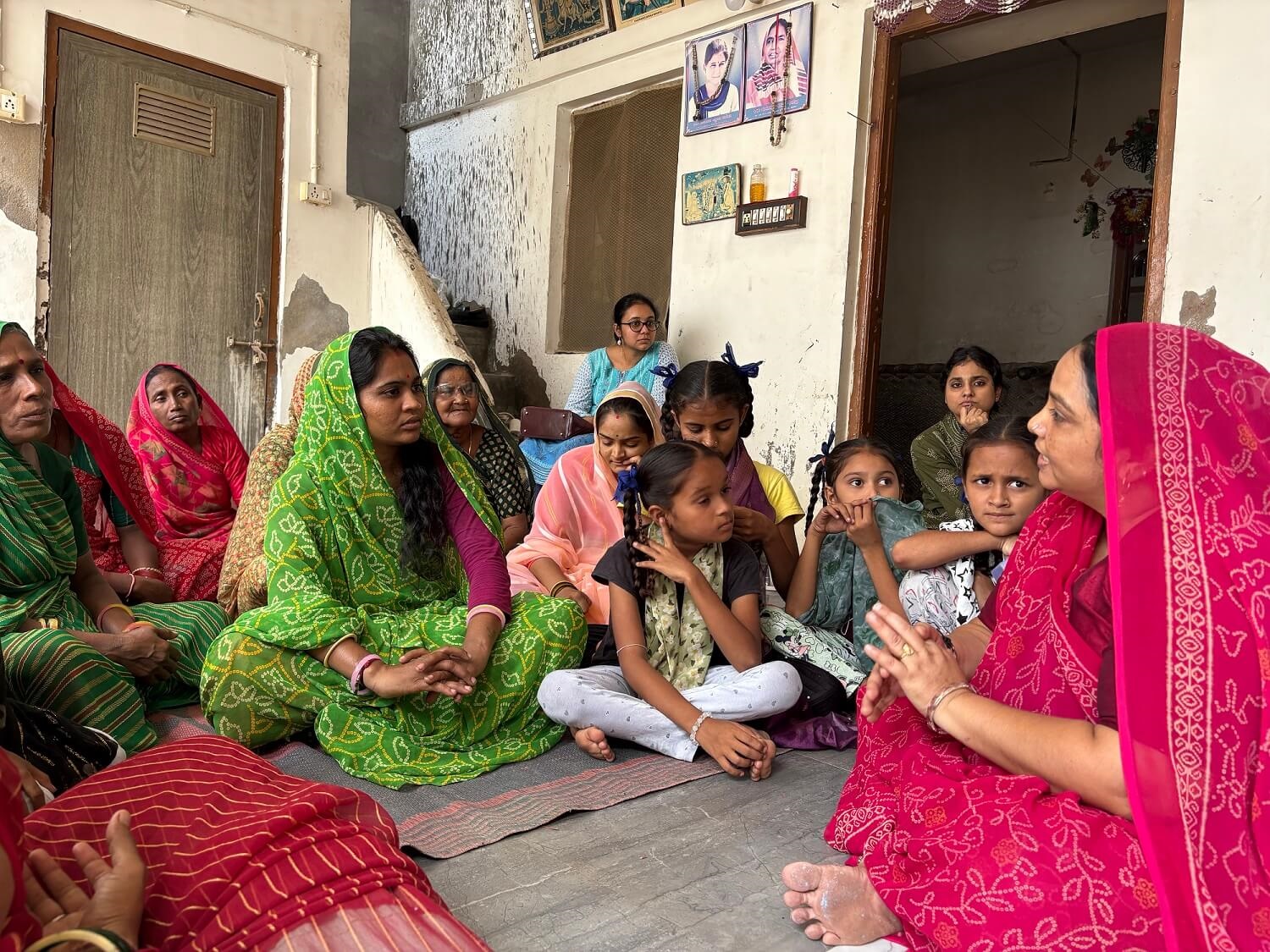
Our primary health care services cover a wide range of activities, from health education to referral services. This comprehensive approach helps ensure that everyone has the knowledge and support they need to stay healthy.
With the leadership of our Arogya Sevikas and Arogya Sakhis, we aim to:
- Educate informal women workers and their communities about important health issues and create awareness
- Provide simple health information
- Connect people with quality healthcare services
- Improve overall access to healthcare and also act on the social determinants of health like water and sanitation
By empowering women and building strong community connections, we are working together to create healthier, more informed communities.
We work to advance SEWA’s vision by responding to the evolving and emerging needs of our members, informal women workers and their families. Our approach includes work security, income security, food security, and social security, the goals of SEWA movement.
Social security importantly includes healthcare and its social determinants. Therefore, we link women with healthcare, childcare, insurance, pensions, housing, and sanitation. These services are designed to support informal women workers holistically, enabling them to live and work with dignity and to achieve self-reliance.
All our programmes are member-led and women-driven, reflecting the voices, priorities, and leadership of women. By addressing economic and social needs together, we aim to build resilient, self-reliant communities.
Health Education and Awareness
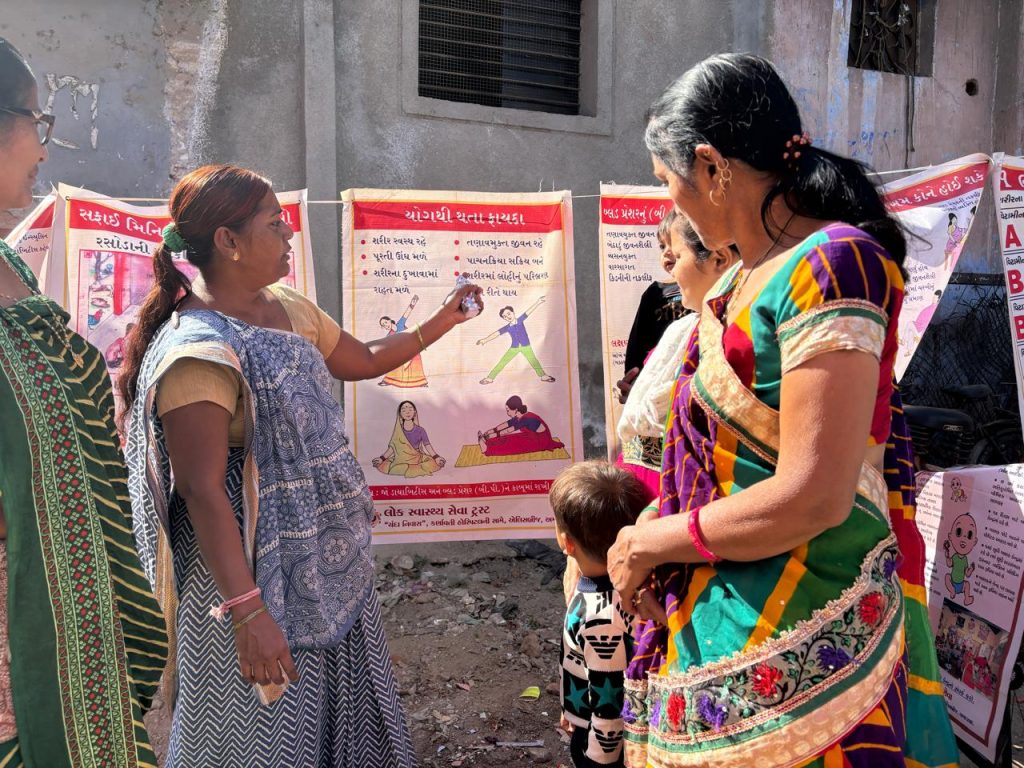
Health Education is provided on various topics such as anaemia, nutritious food, sanitation, maternal and child health, government schemes, mental health, non-communicable diseases and occupational health, among others. This education is given through various media such as posters, videos, demonstrations, games and flip charts. To make education more effective, follows up with the members to see whether the education was helpful to them.
Health education and awareness form a core component of our community health initiatives. Through regular sessions conducted during health camps, we aim to equip community members with the knowledge and confidence needed to take charge of their health and make informed choices.
Interactive and participatory sessions focus on key areas such as nutrition, hygiene and sanitation, maternal and child health, adolescent health, and the prevention and early detection of common illnesses. Special emphasis is placed on promoting healthy lifestyles, self-care practices, and understanding the importance of timely medical attention.
These sessions also create awareness about government health programmes, public healthcare services and available entitlements, enabling community members to better navigate the health system. Delivered in locally appropriate and accessible formats, the sessions encourage dialogue, questions, and shared learning, helping to build long-term health awareness and preventive practices within the community.
Sewa Shakti Kendra
SEWA Shakti Kendras are community-based empowerment centres that seek to improve awareness and access to health and social security for women in the informal economy through increased and improved coordination with government functionaries and institutions. These centres serve as a focal point for all community-based activities led by women and young people, which has supported them in the triggered process of exercising their democratic rights services and active participation at the local level, leading to their enhanced access to entitlements and services in both rural and urban areas.
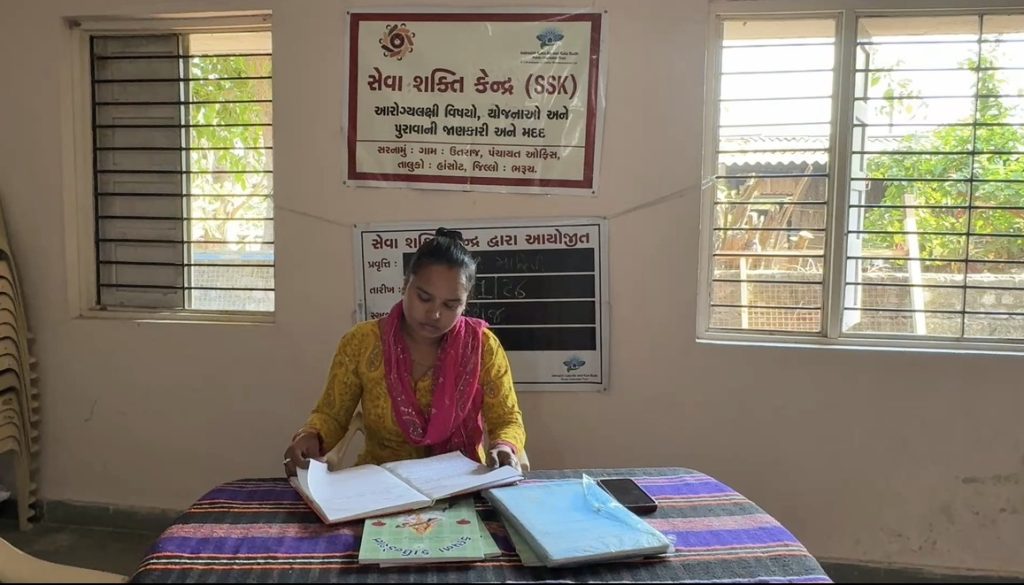
SEWA Shakti Kendras were started in 2015 with just two centres, but today there are 41. All these centres are run by local Aarogya Sevikas and Sakhis, of who are committed to serve their communities.
Before launching the centre, the Sevikas and Sakhis conducted a local level survey, in which information was collected about the schemes, documents and needs of the women and their families. Through this survey, the main needs and issues of the local community were identified, such as updating documents, availing of government schemes and what services are needed for treatment of both communicable (TB, respiratory diseases) non-communicable diseases such as diabetes, blood pressure, cancer and thyroid.
Based on the findings of the survey, services are provided to people through various activities. These included special health events, meetings with government officials and exposure visits.